Herb Benefits of Curry Leaves

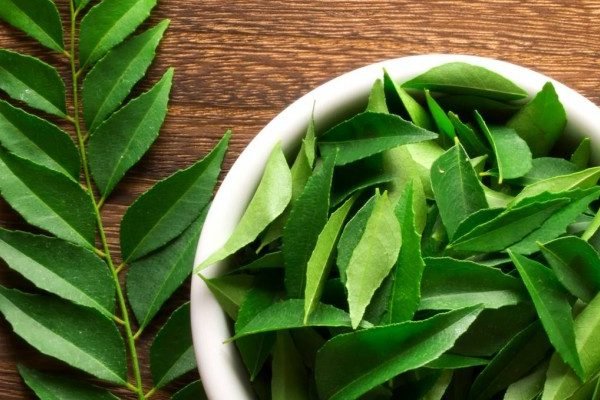
Curry Leaves, also known as Murraya Koenigii or Bergera Koenigii is mainly found in the tropical and sub-tropical regions like India and Sri Lanka, home of the Rutaceae family of trees. Commonly known as “sweet neem leaves”, curry leaves are often used in many dishes and curries. The curry tree is a very efficient tree whose bark and root are also very useful apart from the leaves. The tree doesn’t grow very long and can be seen in the backyard of many homes across India and Sri Lanka. Curry leaves are typically used more in South India than they are used in North India. Primarily, Curry leaves are used in their native form, that is directly from the tree into the dish, but there are curry powders also available in the market which act as the taste substitute for the leaves if someone doesn’t want any leaves in their dishes.
Primary Use of Curry Leaves
Curry leaves have the ability to make food more delicious and also gives it a lovely fragrance. Curry Leaves are also anti-diabetic, antioxidant, antimicrobial, anti-inflammatory, anti-carcinogenic and hepato-protective which means the ability to protect the liver from damage. Moreover, the roots of the tree are used in body aches and the bark is used to provide relief in case of a snake bite.
Chemical and Nutrient content in Curry Leaves
The herb contains following compounds
- Nicotinic acid
- Vitamin C, A, B, E
- Antioxidants
- Plant Sterols
- Amino acids
- Glycosides
- Flavonoids
- Mahanimbine
- Murrayanol
- Mahanineoenimbine
- O-Methylmurrayamine
- A,O-Methylmahanine
- Isomahanine
- Bismahanine
- Bispyrayafoline
Health Benefits of Curry Leaves
-
Beneficial in Controlling Diarrhea
 Research studies conducted on lab rats showed that curry leaves have anti-diarrheal properties because of the presence of carbazole alkaloids in it. It can significantly control castor oil-induced diarrhea when some leaves are grounded to make a paste or even if the extracted juice is consumed.
 -
It is a very good Anti-oxidant
Curry leaves contain many vitamins like Vitamin A, Vitamin B, Vitamin C and Vitamin E which makes it a good source of antioxidants. Due to this curry leaves, whether mixed in curries or other vegetable dishes, works amazingly in reducing oxidative stress. -
Useful in fighting against cancer
Research done on curry leaves in Japan depicted cancer-fighting signs in the carbazole alkaloids extracts of curry leaves. Phenols and other chemical components found in curry leaves are found useful against leukemia, prostate cancer and colorectal cancers. -
Helpful against Hair loss
Hair loss is quickly becoming more common nowadays. People are spending so much money on hair treatments when they can use curry leaves instead. They are believed to strengthen the hair roots. In the case of gray hair, a paste of curry leaves is applied. Sometimes dry powder mixed in oil and massaged into hair does wonders too. -
Good for the Eyesight
It is known that Vitamin A is crucial for the eye. Deficiency of Vitamin A can cause night blindness and even loss of eyesight in some cases. Curry leaves are a good source of Vitamin A. They contain carotenoids which protect the eye surface, also known as the cornea. -
Guards your Liver
It is no secret that the liver is one of the most important organs in the human body. It needs constant protection and care against bacteria, virus and infections. Curry leaves have been found to be helpful in this matter. They contain tannins and carbazole alkaloids which show good hepato-protective properties against diseases like hepatitis and cirrhosis. -
Natural skin care product
The artificial skin care products that people use so often are no match against natural and herbal skin care remedies like the curry leaves. In the case of simple issues like cuts and bruises or in some moderately severe cases like burns, irritations and insect bites, the juice or paste of curry leaves are useful for fast recovery and healing.
 Research studies conducted on lab rats showed that curry leaves have anti-diarrheal properties because of the presence of carbazole alkaloids in it. It can significantly control castor oil-induced diarrhea when some leaves are grounded to make a paste or even if the extracted juice is consumed.
 Curry leaves contain many vitamins like Vitamin A, Vitamin B, Vitamin C and Vitamin E which makes it a good source of antioxidants. Due to this curry leaves, whether mixed in curries or other vegetable dishes, works amazingly in reducing oxidative stress.
 Research done on curry leaves in Japan depicted cancer-fighting signs in the carbazole alkaloids extracts of curry leaves. Phenols and other chemical components found in curry leaves are found useful against leukemia, prostate cancer and colorectal cancers.
 Hair loss is quickly becoming more common nowadays. People are spending so much money on hair treatments when they can use curry leaves instead. They are believed to strengthen the hair roots. In the case of gray hair, a paste of curry leaves is applied. Sometimes dry powder mixed in oil and massaged into hair does wonders too.
 It is known that Vitamin A is crucial for the eye. Deficiency of Vitamin A can cause night blindness and even loss of eyesight in some cases. Curry leaves are a good source of Vitamin A. They contain carotenoids which protect the eye surface, also known as the cornea.
 It is no secret that the liver is one of the most important organs in the human body. It needs constant protection and care against bacteria, virus and infections. Curry leaves have been found to be helpful in this matter. They contain tannins and carbazole alkaloids which show good hepato-protective properties against diseases like hepatitis and cirrhosis.
 The artificial skin care products that people use so often are no match against natural and herbal skin care remedies like the curry leaves. In the case of simple issues like cuts and bruises or in some moderately severe cases like burns, irritations and insect bites, the juice or paste of curry leaves are useful for fast recovery and healing.
How to Use:
- In terms of food and dishes, curry leaves can be added directly to the food or the powdered version can also be used as a spice along with other spices.
- For medicinal purposes, the paste or juice of curry leaves can be used or consumed as per requirement.
- Boiling some leaves in water and then drinking that water also sends the nutrients of curry leaves into the body.
Caution
Curry leaves don’t normally have any side effects but its excessive use can lead to some problems. It has high anti-oxidant power and using excess curry leaves can lead to a deficiency of oxidants in the body. There is also an increased risk of bleeding, digestive distress and Gastroesophageal reflux if the consumption of curry leaves is not checked.
Note: Kindly consult a doctor or a registered medical practitioner before attempting any of the cures suggested on Ayushology.com